Free Muser
Routine Maintenance Is Dead. Long Live 24/7 Continuous Maintenance. #
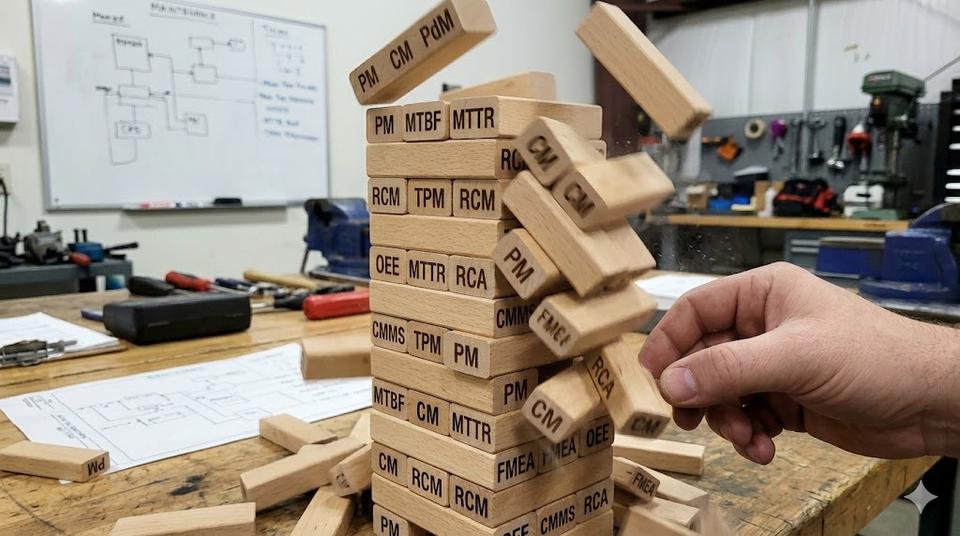
Some industries believe in “routine maintenance.” A schedule. A plan. A calm, rational approach to asset care. But in Facilities and CRES? No. Routine maintenance is for amateurs, dreamers, and people who still believe in happiness. Real professionals know the truth: If you’re not maintaining everything, everywhere, all at once, 24/7, you’re basically committing corporate terrorism. Because apparently, the moment you skip one PM, the entire building collapses like a Jenga tower made of sadness.
The Myth of Routine Maintenance #
Routine maintenance sounds nice on paper:
- Monthly checks
- Quarterly inspections
- Annual servicing Cute. Adorable. Like a toddler pretending to drive a car. But buildings don’t care about your schedule. They wake up every morning and choose violence.
- Pumps fail at 2 AM
- AHUs die during VIP visits
- Elevators stop working when the CEO is inside
- The BMS throws alarms like it’s trying to win a carnival game Routine maintenance? Please.
The CRES Reality: Continuous Maintenance or Die #
Here’s the real Facilities Management philosophy: If you’re not maintaining it right now, it’s already broken. This is why FM teams behave like:
- Surgeons on call
- Firefighters in a lightning storm
- Parents of a toddler with a sugar addiction Because the building is always plotting something.
The 24/7 Maintenance Model™ #
Let’s break down the scientifically accurate approach:
- Inspect everything. Constantly. If you’re not checking the chiller every 15 minutes, how will you know it’s still alive?
- Touch every asset daily. Not for maintenance — for emotional support.
- Replace parts before they even wear out. Preventive maintenance? No. Pre preventive maintenance.
- Have a technician stationed at every corner. One for the lobby. One for the pantry. One for the elevator. One for the elevator that no one uses but still breaks.
- Sleep is optional. The building doesn’t sleep. Why should you?
The Facilities Manager’s Nightmare Cycle #
Here’s how it goes:
- Skip one PM
- Asset fails
- Client screams
- You fix it
- Client screams harder
- You implement 24/7 monitoring
- Client screams about cost
- You reduce monitoring
- Asset fails again
- Client whispers first and then screams louder
- Repeat until retirement or death (whichever comes first) This is known as the FM Circle of Life™.
The Building’s Personality: Needy, Clingy, and Emotionally Unstable #
Buildings in CRES behave like:
- A high maintenance partner
- A toddler with separation anxiety
- A cat that only wants attention when you’re busy They demand:
- Cooling
- Power
- Water
- Filters
- Lubrication
- Calibration
- Validation
- Revalidation
- Re revalidation
- And emotional reassurance If you ignore them for even one day, they punish you with:
- Alarms
- Leaks
- Breakdowns
- Complaints
- And the dreaded “urgent email marked HIGH IMPORTANCE”
The New Standard: Hyper Maintenance #
Introducing the future of Facilities Management: Hyper Maintenance™ Maintenance so continuous, so relentless, so obsessive, that the building becomes afraid to break. Key features:
- Sensors on sensors
- Technicians monitoring technicians
- PMs scheduled every hour
- Assets maintained more than they’re used
- A maintenance plan longer than the Bible This is the only way to achieve true operational excellence.
Conclusion: Routine Maintenance Is a Lie We Tell Ourselves #
If you want to survive in CRES, forget routine maintenance. You need:
- Continuous monitoring
- Continuous servicing
- Continuous inspections
- Continuous panic
- Continuous caffeine Because buildings don’t care about your schedule. They only care about one thing: Breaking at the worst possible moment. So embrace it. Live it. Become one with the maintenance. Because in Facilities Management, the only routine is non stop chaos.
Uptime Data Center Tier System Upgrade #
Uptime Institute Has 4 Data Center Tiers. We Need Way More. Like… 400. #
The Uptime Institute proudly created four data center tiers:
- Tier I: “We have electricity.”
- Tier II: “We have electricity… twice.”
- Tier III: “We can maintain things without crying.”
- Tier IV: “We survive the apocalypse.” Cute. But in today’s world of hyperscale cloud, AI workloads, and clients who panic when the Wi Fi drops for 0.2 seconds, four tiers are nowhere near enough. If we want TRUE reliability, TRUE uptime, TRUE operational supremacy… We need at least 400 tiers. Minimum. Because nothing says “resilient infrastructure” like a tiering system so complicated it requires its own PhD.
Tier V: The “We Swear It Won’t Break” Tier #
This tier guarantees:
- 99.999999% uptime
- Backup generators for the backup generators
- A technician who lives inside the UPS room
- A priest on standby for exorcisms
Tier VI: The “We Built This on a Volcano” Tier #
For clients who demand:
- Zero downtime
- Zero risk
- Zero sanity This tier includes:
- Lava cooled racks
- Seismic floating floors
- A dragon for physical security
Tier VII: The “We Can Survive a Nuclear Strike” Tier #
Features:
- EMP proof everything
- Walls thicker than a bank vault
- A bunker stocked with snacks for 200 years
- A dedicated team of engineers who haven’t seen sunlight since 2014
Tier VIII: The “We Don’t Even Trust Physics Anymore” Tier #
This tier rejects the laws of nature entirely.
- Gravity resistant racks
- Quantum powered cooling
- Servers that exist in multiple states of uptime simultaneously
- Schrödinger’s BMS
Tier IX: The “We Maintain the Universe” Tier #
At this level, the data center is so reliable that:
- It stabilizes the local weather
- It prevents global warming
- It fixes your marriage
- It automatically renews your certifications
Tier X: The “God Mode” Tier #
This is the final form of uptime. Requirements:
- Zero downtime
- Zero maintenance windows
- Zero human involvement
- Zero excuses The data center maintains itself, heals itself, and judges you silently.
But Why Stop at Tier X? Let’s Go Full Madness. #
Here are some additional tiers the Uptime Institute should add: Tier Name Description Tier 11 Immortal Tier The data center cannot die. Ever. Tier 12 Multiverse Tier Your workloads failover to alternate realities. Tier 13 Divine Intervention Tier Angels handle your patching. Tier 14 Anti Entropy Tier Equipment gets newer over time. Tier 15 Time Travel Tier Downtime is prevented retroactively. Tier 16 Infinity Tier Infinite redundancy. Infinite cooling. Infinite budget. Tier 17 Customer Proof Tier Even the dumbest user cannot break it. By Tier 50, the data center becomes self aware. By Tier 100, it becomes your boss. By Tier 200, it runs the planet. By Tier 400, it replaces the Uptime Institute entirely.
Conclusion: Four Tiers Are for Cowards #
If we want true uptime — REAL uptime — we need a tiering system that:
- Terrifies engineers
- Confuses auditors
- Impresses clients
- And requires a 600 page manual to understand Because in the world of CRES and Facilities, reliability isn’t a goal. It’s a religion. And four tiers? That’s not a religion. That’s a pamphlet.