
Free Muser
Near Miss Reporting Should Be Done Every Waking Moment #
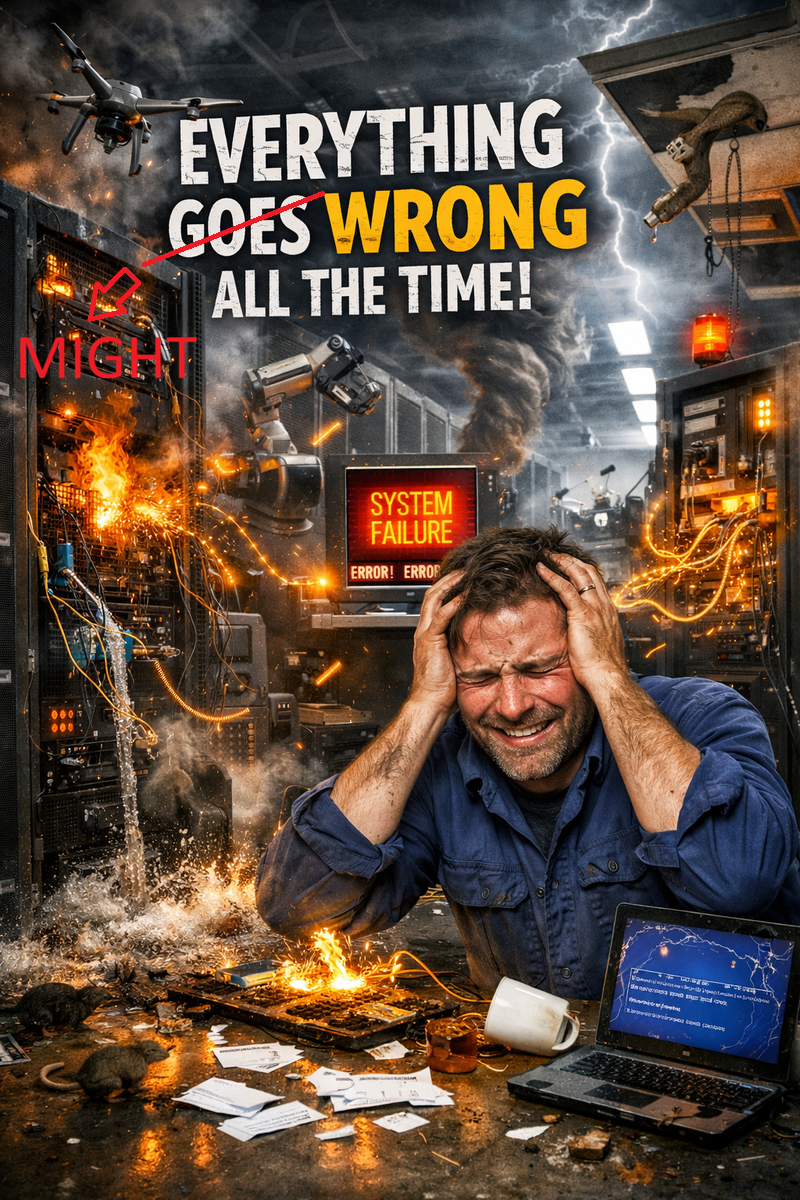
Near miss reporting used to be simple. Something almost went wrong? You report it. Done. But that was before HSE realized the truth: Everything is a near miss. All the time. Forever. In the modern CRES world, a near miss isn’t just:
- A falling object
- A slip
- Sitting
- Breathing
- Thinking And therefore, it must be reported.
The 24/7 Near Miss Lifestyle #
Paranoid, even. So now, every Facilities professional must live in a constant state of:
- Observation
- Self reflection
- Mild existential dread You’re not just doing your job — you’re starring in a never ending safety documentary. Here are some real world scenarios that now qualify:
- You walked past a chair. It could have broken. Near miss.
- You opened a door. It could have hit someone. Near miss.
- You drank water. You could have choked. Near miss.
- You looked at a ladder. You could have fallen off it… in theory. Near miss.
- You thought about doing work. You could have strained your brain. Near miss. Report them all.
The Near Miss Reporting Kit™ #
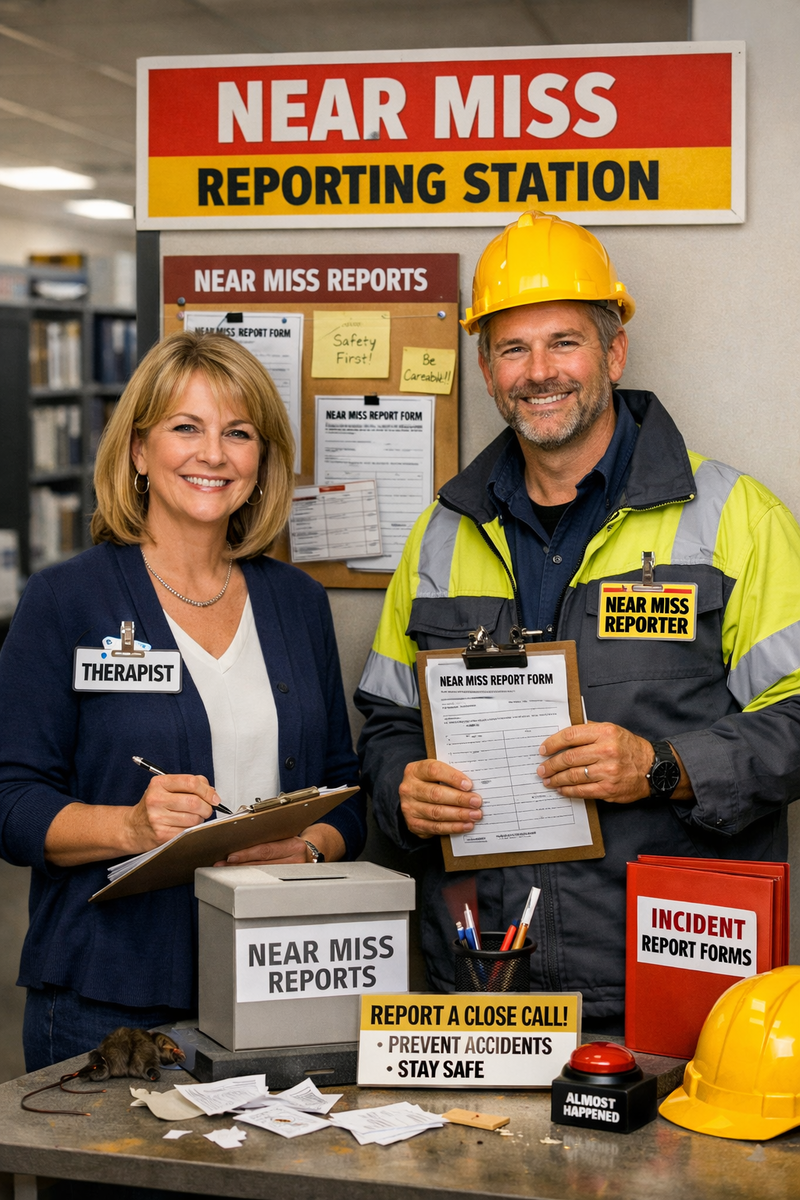
To support this new lifestyle, every employee must carry:
- A Near Miss Logbook
- A backup Near Miss Logbook
- A pen
- A backup pen
- A body worn camera
- A panic whistle
- A reflective vest labeled “NEAR MISS OBSERVER” Optional: A therapist.
The Near Miss Reporting Frequency Standard #
HSE recommends reporting:
- 1 near miss every hour (Beginner)
- 1 near miss every 10 minutes (Intermediate)
- 1 near miss every 30 seconds (Advanced)
- Continuous near miss streaming (Expert Level / CRES Professional) By the time you reach Expert Level, you no longer work — you simply report.
The Near Miss Pyramid of Doom™ #
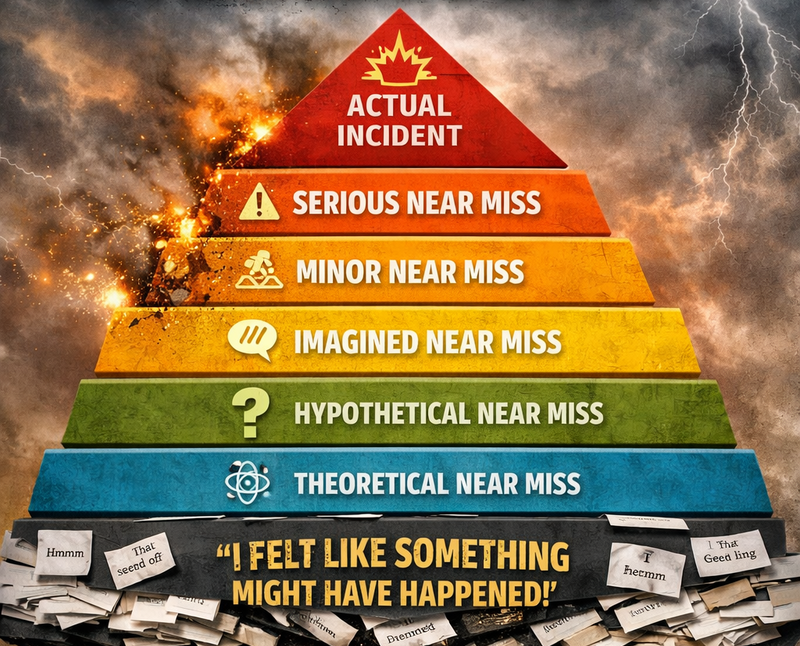
Here’s the scientifically accurate model: Level Description Top Actual Incident 2 Serious Near Miss 3 Minor Near Miss 4 Imagined Near Miss 5 Hypothetical Near Miss 6 Theoretical Near Miss Bottom “I felt like something might have happened” The goal is to fill the bottom layer until the pyramid collapses under its own weight.
The Near Miss Hotline #
To improve reporting efficiency, CRES should implement:
- A 24/7 hotline
- A mobile app
- A chatbot
- A panic button
- A wearable sensor that auto reports near misses when your heart rate increases Soon, your smartwatch will vibrate and say: “You almost tripped over nothing. Report submitted.”
The Ultimate Goal: Zero Incidents, Infinite Reports #
HSE dreams of a world where:
- Nothing bad ever happens
- But everything is reported anyway This is known as the Safety Paradox: The safer things get, the more unsafe we must pretend they are.
Conclusion: Near Miss Reporting Should Never Stop #
In the new world of Facilities and CRES:
- Every moment is a hazard
- Every action is a risk
- Every breath is a near miss So report it. All of it. Forever. Because safety isn’t just a priority — it’s a full time job. And you’re never off duty.